


What is a Private Real Estate Investment?
Private real estate offerings have become increasingly popular as real estate investors seek to diversify their investment portfolios. One of the most important things to understand as an investor in private real estate investment is how the investment is structured.
In this post, we’ll go through how to analyze the real estate investment structure, which determines how the property’s profits are divided between passive investors and the multifamily sponsor.
Before we get into how private real estate offerings are structured, let’s define what a private real estate investment (sometimes called a syndication) is.
A private real estate investment occurs when various investors pool together their resources, capital, and skills to purchase a real estate property.
Private real estate offerings can occur with a variety of asset classes, including:
- apartment buildings
- mobile home parks
- land
- self-storage
& more!
Who’s Involved in Private Real Estate Offerings?
There are two parties involved in the private real estate investment, The General Partners, commonly referred to as real estate sponsors, and the Limited Partners, widely referred to as passive investors.
The General Partners in the investment will do the work of finding the deal, raising the capital, and once the deal closes, ensuring the investment is lucrative to investors!
The Limited Partners are responsible for providing the capital for the private real estate investment. Once the deal is closed, passive investors will not have active responsibilities in managing the asset.
When it comes to private real estate offerings, there are many ways you can structure a project. The structure will depend on the General Partner’s experience, track record, the specific deal, the market, as well as many other factors.
The way a private real estate investment is structured will affect the returns for passive investors, which is a significant reason why passive investors (LPs) must understand the types of real estate investment structures.
Let’s get into a few of the most common ways that private real estate offerings are structured.
Types Of Real Estate Investment Structures
Straight Split – Real Estate Structure
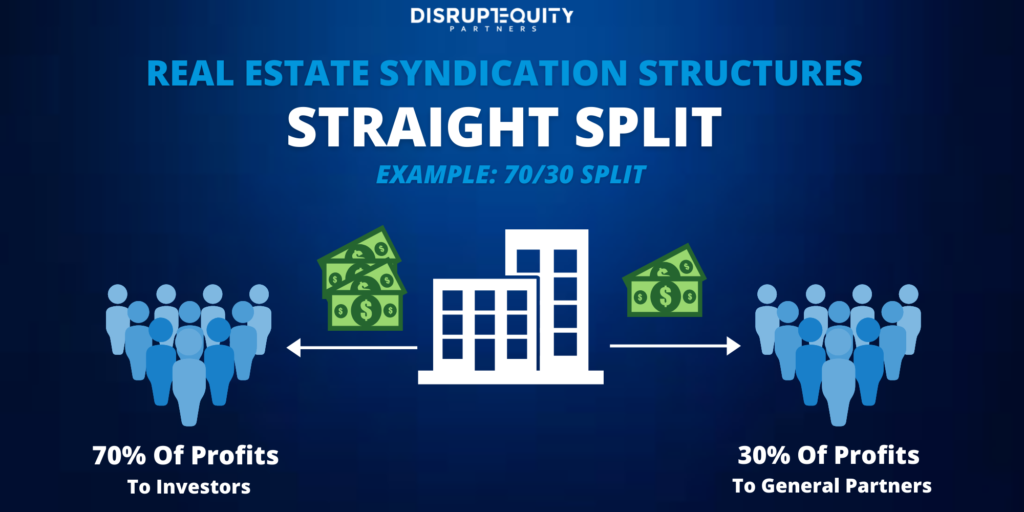
One of the simplest and straightforward investment structures for paying out the private real estate investment profits is called a straight split.
With a straight split structure, any profits from the asset are split according to the ownership percentage of the investors and general partners.
The same percentage split is used for all returns that the investment generates. cash flow, capital gains after the sale of the property, etc.).
A common example of the straight split investment structure would be a 70/30 split, meaning 70% of profits would go to the private real estate offerings passive investors and 30% would go to the general partners.
For example, with a straight split of 70/30, if a private real estate investment generates $200,000 in profits, the sponsor will take their 30% or $60,000 and the remaining $140,000 will be split evenly amongst the passive investors.
Waterfall Structure – Real Estate Investment Structure
A waterfall structure is another common way of structuring a private real estate investment. The waterfall structure allows for an uneven payout distribution when certain investor return hurdles are met.
Below is an example of what a waterfall structure in a private real estate investment may look like:
WATERFALL STRUCTURE EXAMPLE:
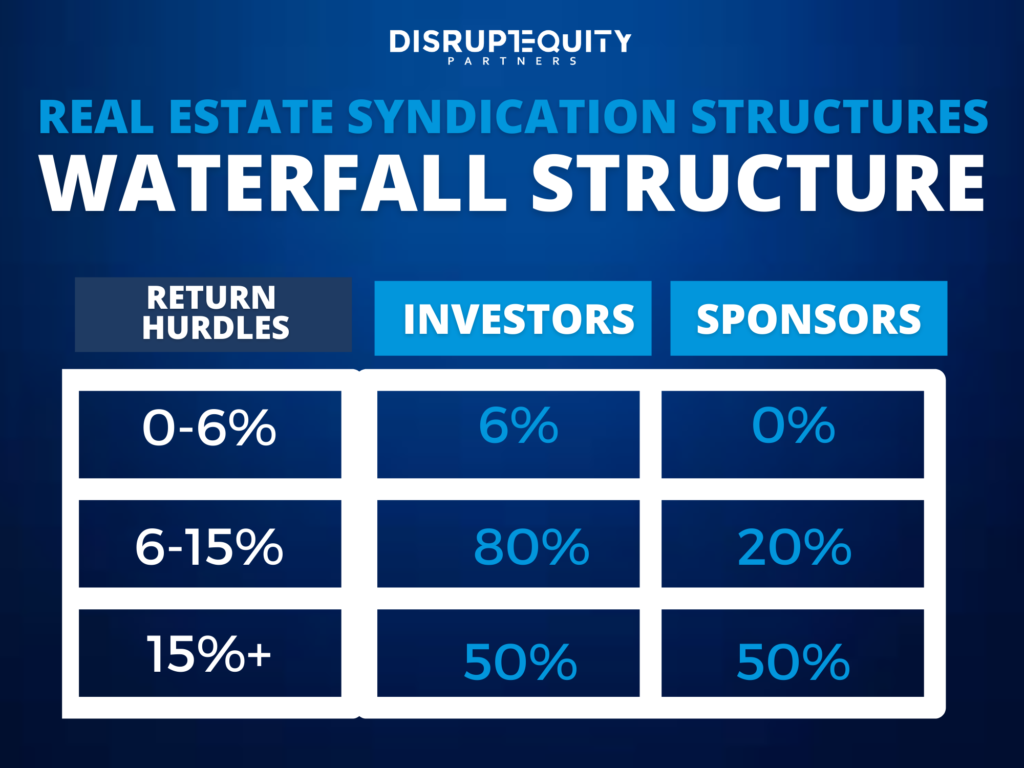
The first return hurdle is to pay the private real estate investment’s passive investors a 7% preferred return; when this goal has been met, the structure of the investment changes to an 80/20 straight split. This continues until the 15% rate of return threshold is met. When the 15% return hurdle is met, this activates a 50/50 straight split in which profits are equally divided among both passive investors and the general partners in the private real estate investment.
Please take a look at this waterfall example outlined in the graphic below.
The waterfall structure is a widespread real estate investment structure and most often will start with a preferred return to investors.
Including a preferred return in the real estate investment structure is a great benefit to passive investors. Preferred returns in real estate investment structures will typically range from 5-10%.
Preferred returns require that the private real estate investment pay out a set return rate to passive investors before the general partner or sponsors can profit. As you can see from our example above, when a 6% preferred return is included in the real estate investment structure, the first 6% of profits go directly to passive investors before the investment’s general partners. The general partners will only profit if the investment’s return is above 6%.
By including a preferred return in the waterfall structure, the general partners are incentivized to not only reach the preferred return but exceed it because the preferred return must be paid to investors before the sponsorship team can profit.
After the preferred return has been reached, the next phase of the waterfall structure is activated.
As you can see from our example above, profits between 6-15% would be structured in an 80/20 split with 80% profit to investors and 20% of the profit to the general partners.
If returns of the private real estate investment exceed 15%, the waterfall structure will break into a 50/50 even split between investors and general partners.
A waterfall structure can incur different splits based on the return thresholds met so its important to fully understand each hurdle outlined in the offering memorandum.
What is the Best Real Estate Investment Structure?
The reality is that there is no one way to invest in private real estate offerings, and depending on the performance of the investment, one structure may generate better returns than the other.
Many factors must be considered to decide if an investment is right for you. As a passive investor, you will want to understand the return thresholds and ensure the splits match up with your real estate investment goals.
Overall, passive investors prefer preferred returns as it provides safety on their return and accountability to their multifamily sponsor.
Additionally, preferred returns allow for passive investors to achieve more stable yearly passive income.
Final Thoughts on Real Estate Investment Structures
Private real estate offerings can be attractive investment opportunities. They are a great way to diversify your portfolio, but please remember that no specific real estate investment structure will guarantee you high returns.
As you can see from our examples, real estate investment structures have a large impact on investor returns, making it imperative that you understand how the investment is structured before you invest.
One of the most important aspects of investing in a private real estate offering is picking the right multifamily sponsor that you like, know, and trust.
Along with partnering with the right team, before investing in a private real estate offering, you want to ensure the investment aligns with your individual goals and risk tolerance.
If you are looking to further your education on private multifamily investments, please check out the free educational resources below.
- Multifamily Investing Toolkit
- Disrupt Equity Blog
- Private Real Estate Investment Video Content
If you are interested in investing in private multifamily investments with Disrupt Equity, please fill out our investment form to be notified of our upcoming apartment investment opportunities.